Reason Codes
Overview
A reason code is a code that can be used to explain the negative (or adverse) outcome of a decision process that relies on rules using data and analytics.
- In order to explain an adverse action we need to:
- Identify the rule(s) that caused the adverse action
- For such rule(s), identify the variable(s) that caused the adverse action
- For such variable(s), identify a compliance approved reason code that can be used to explain the decision to the customer
- The platform allows users to create, approve and assign a reason code to each rule in a policy so that it can be used to accomplished the above
- Additionally, if a model has a registered explainer then the users can also assign reason codes to each of the model's input variables
Creating Reason Codes
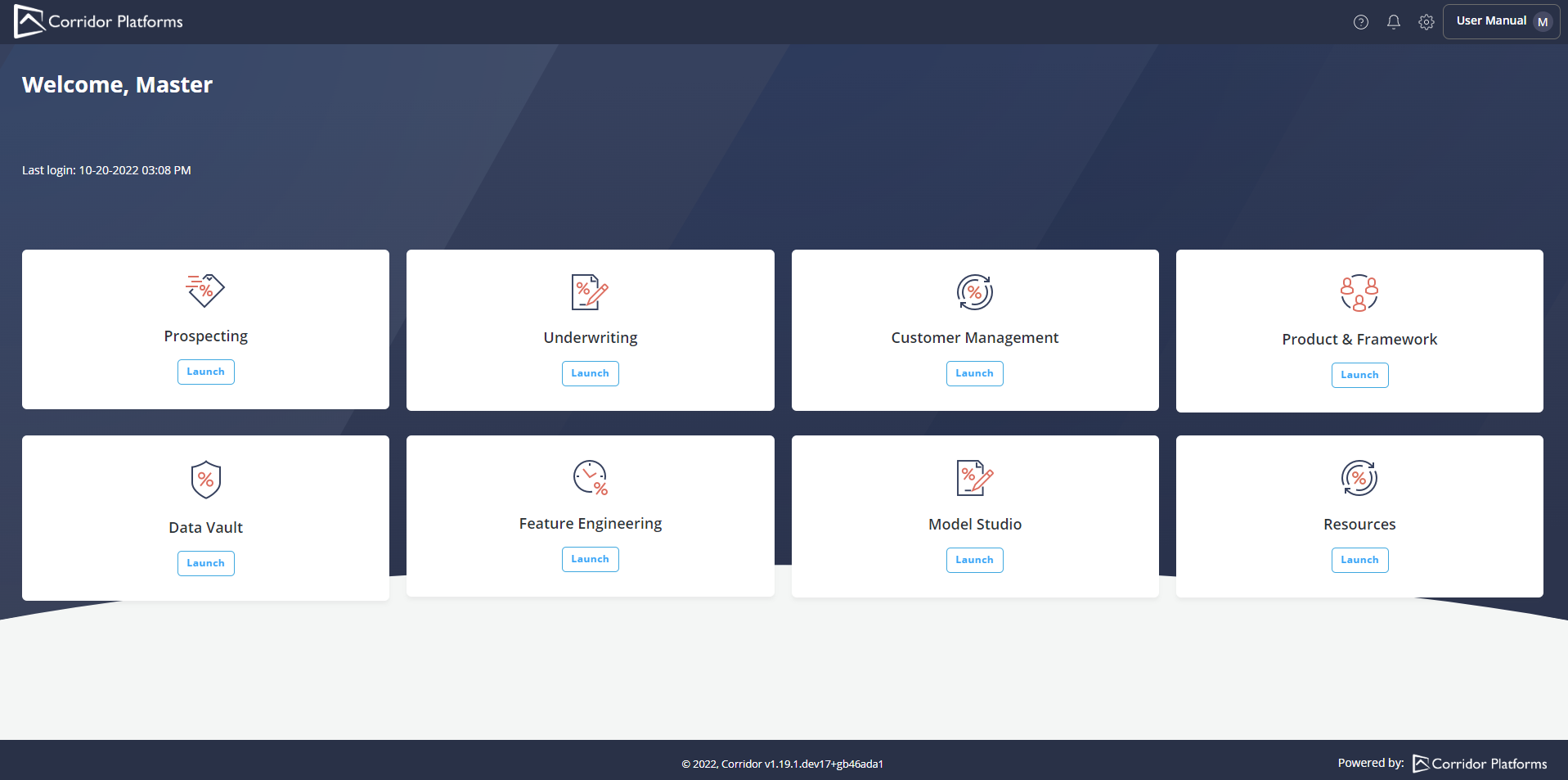
- Click on Resources on the Homepage
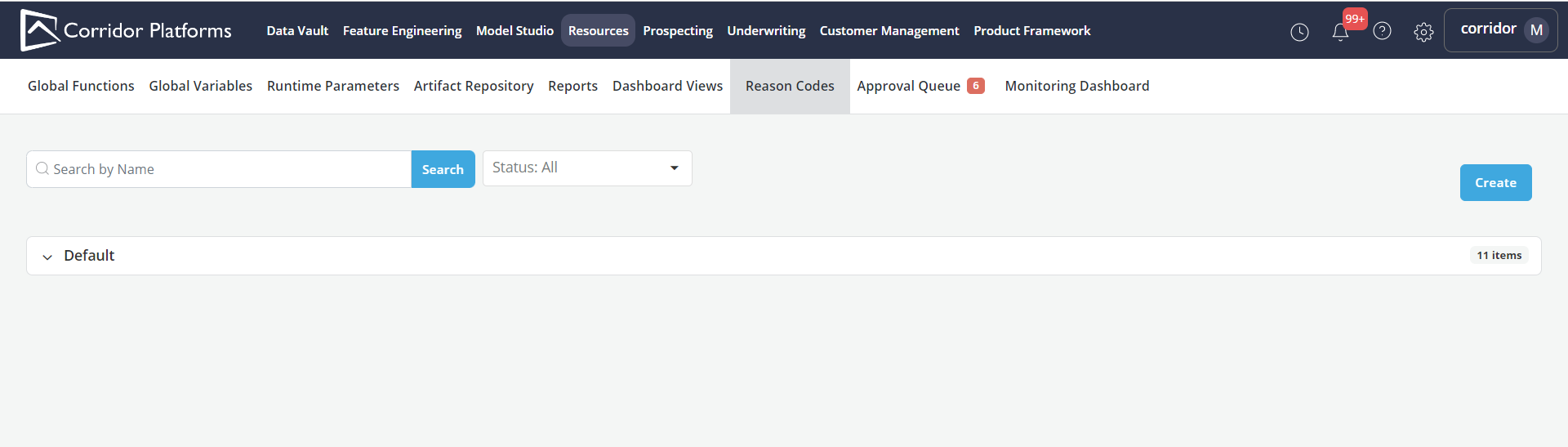
- Click on Reason Codes and click on Create
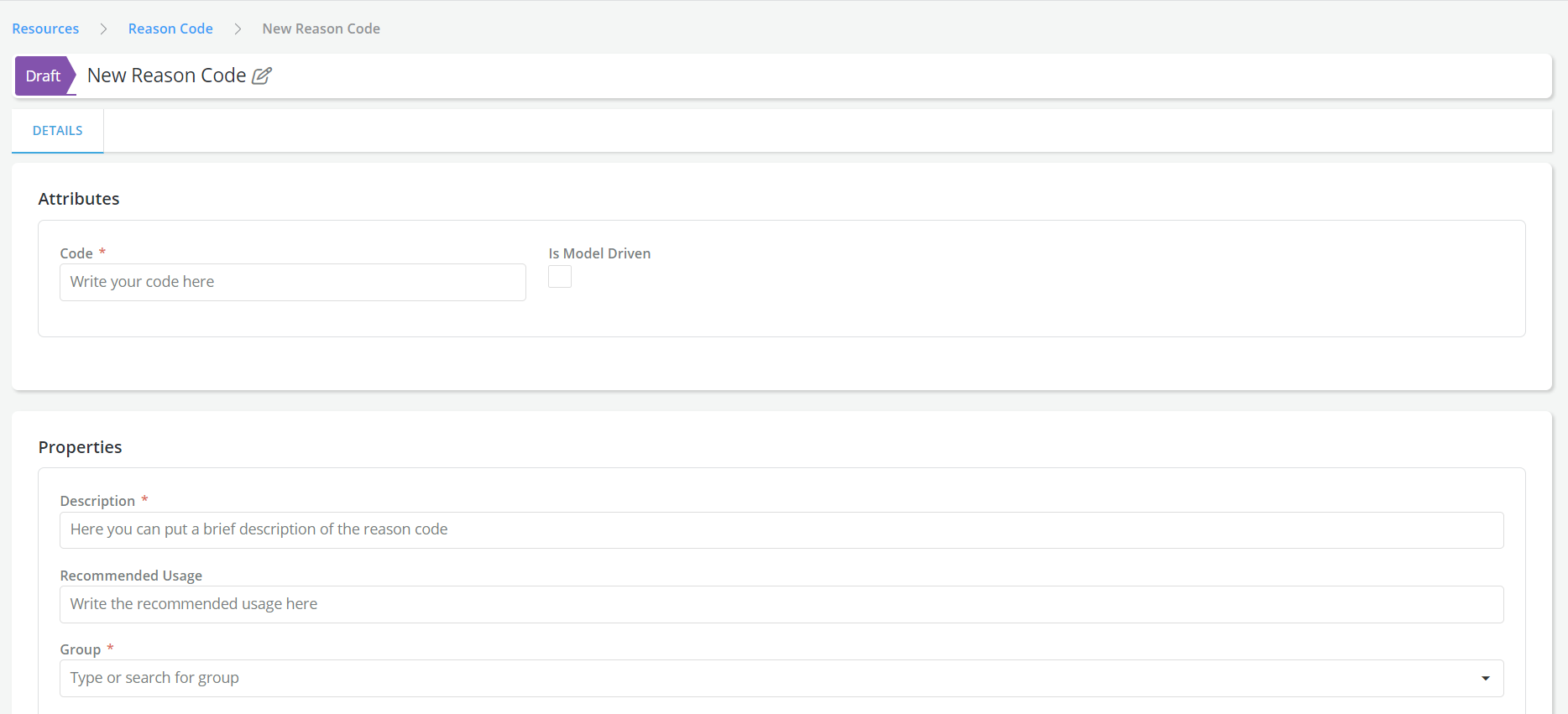
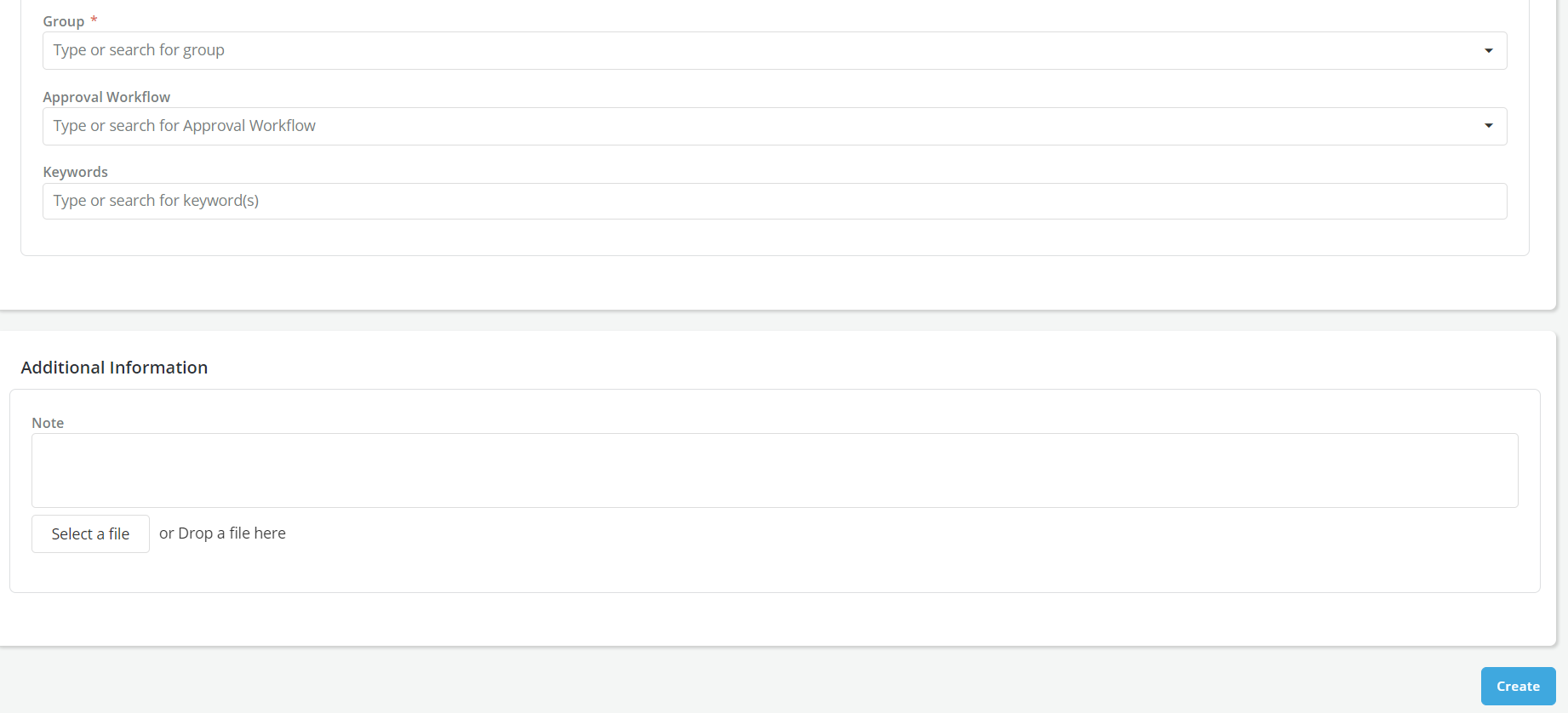
- Enter the name for the reason code in New Reason Code field
- Check "is Model Driven" IF the reason code is to be inferred from a model
- Enter all mandatory fields, scroll down and click on Create
- A pop-up message is displayed after successful save
- Once a Reason Codes is created, it will start appearing as a choice in the reason code field of any policy rule
- User is allowed to assign one reason code per rule
- If a rule uses a model then a “model-driven-reason-code” can be assigned to the rule
- In such case the actual reason codes will be derived from the model
- This requires the model to be registered with an explainer
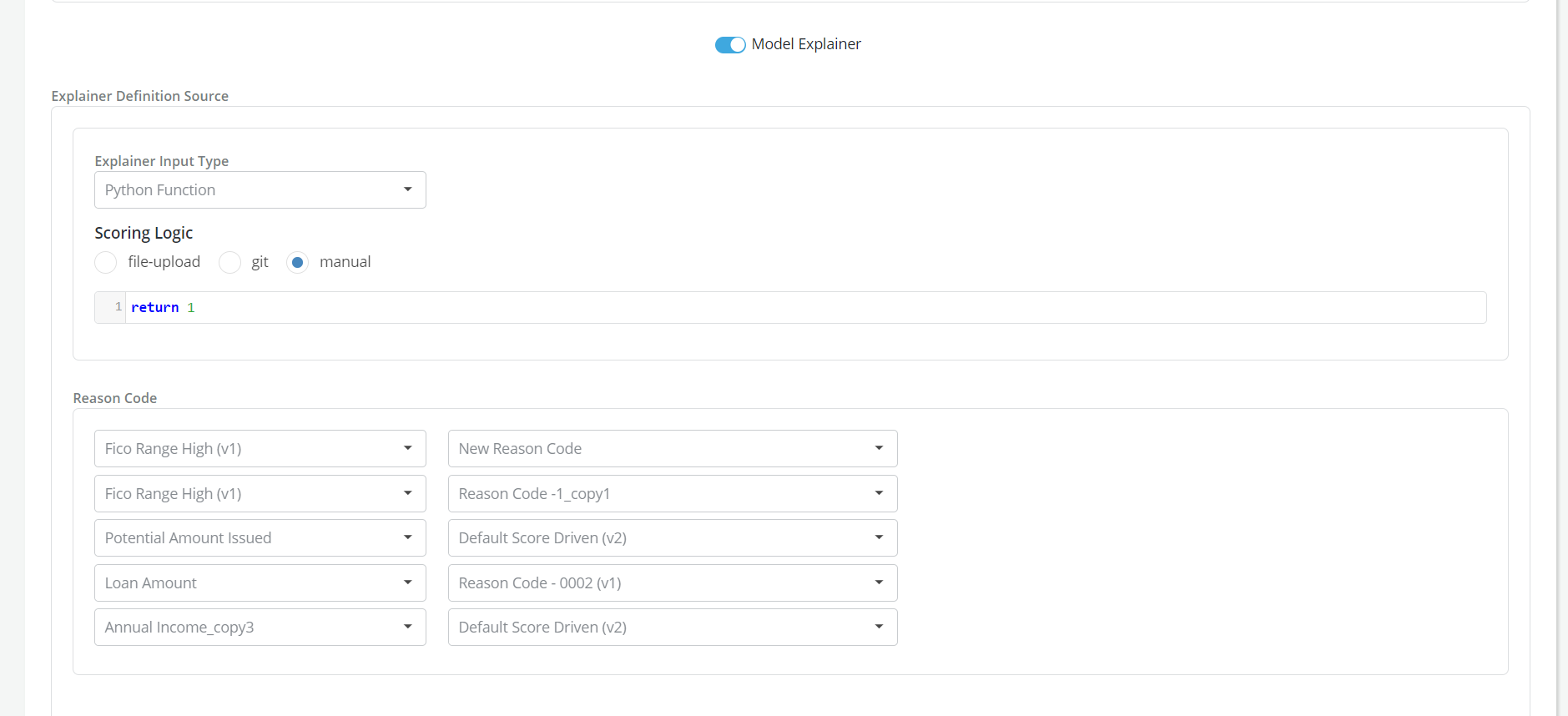
- It also requires reason codes to be assigned to each of the model's input variables (See screenshot below)
Where we can use the reason codes
-
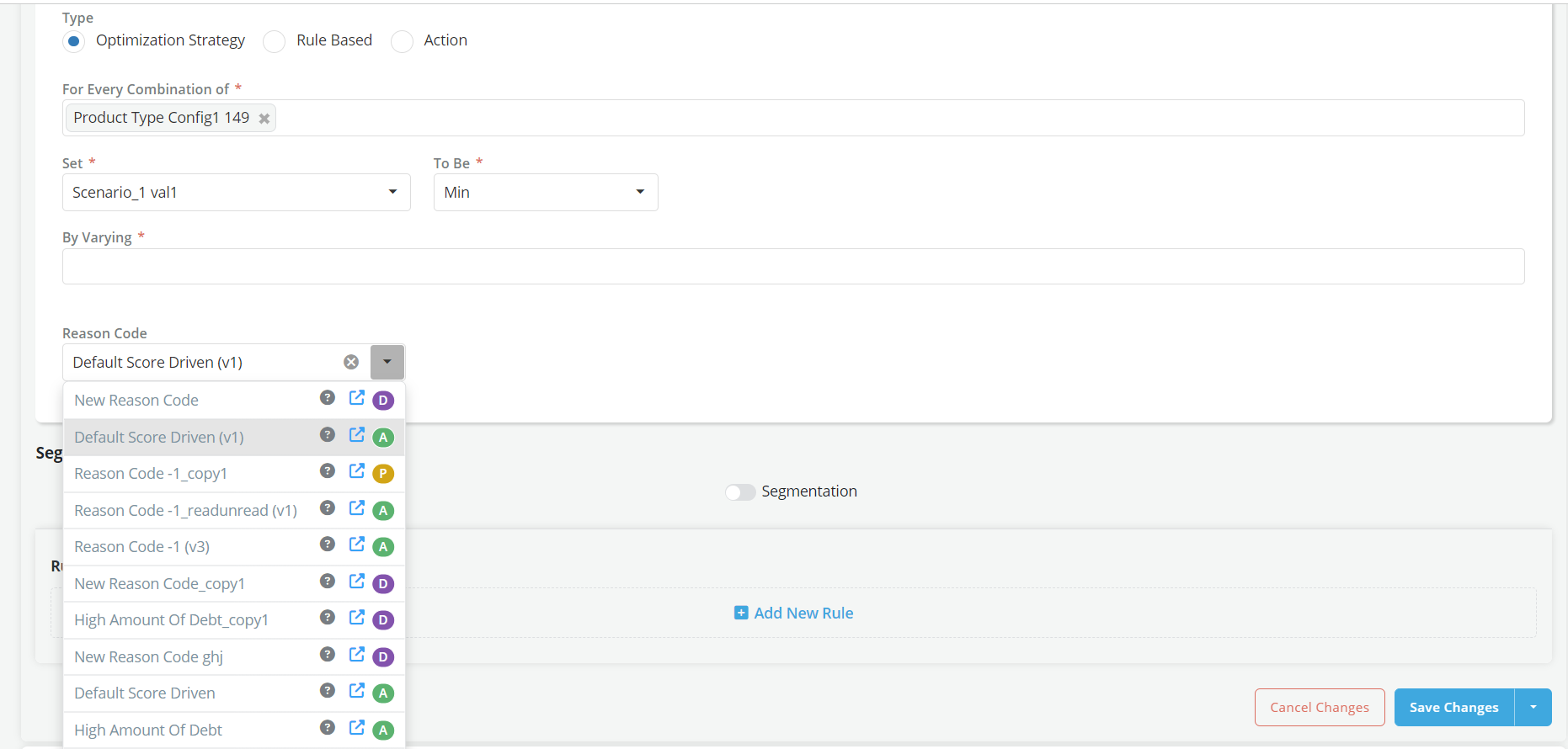
If the strategy is an optimization strategy then users can only assign one strategy-level reason code.
-
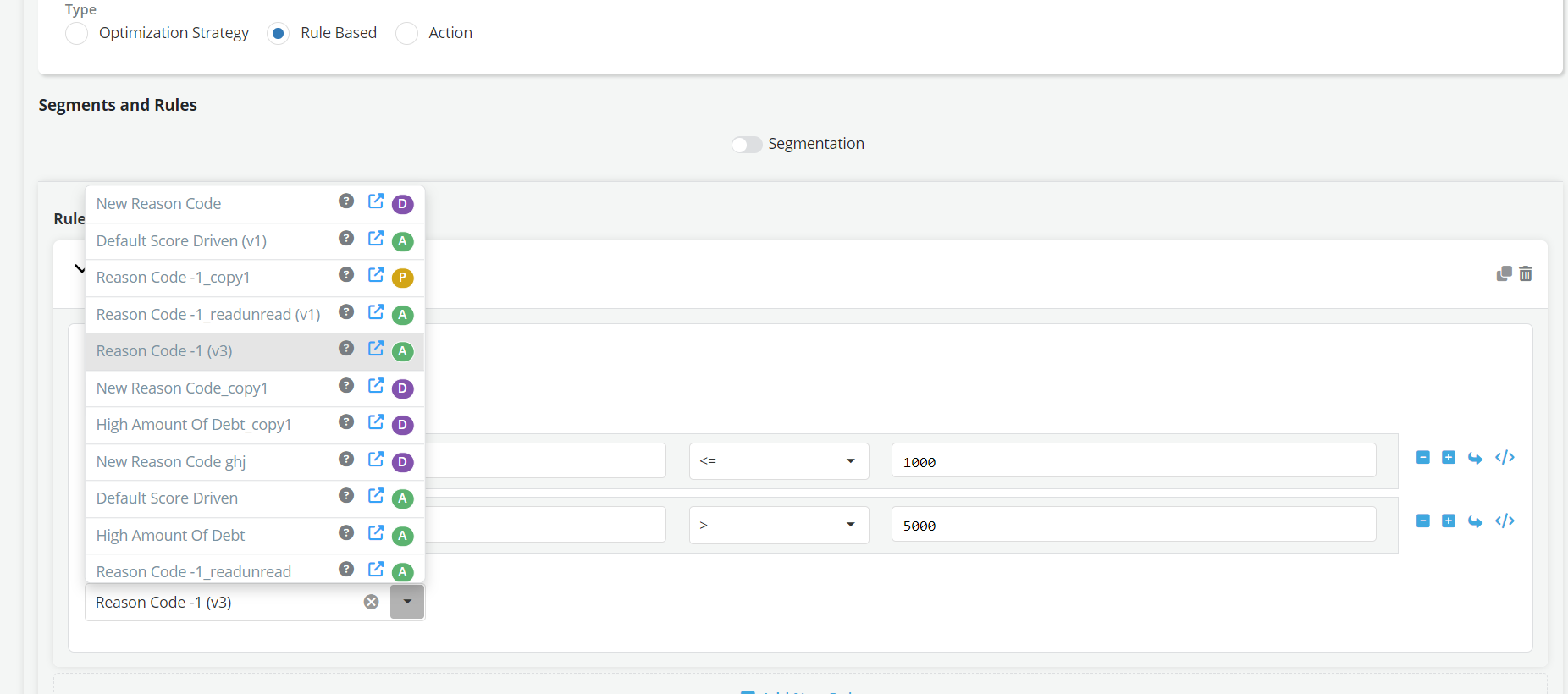
If the strategy is an Rule Based strategy then users can assign Rule-level reason code.
-
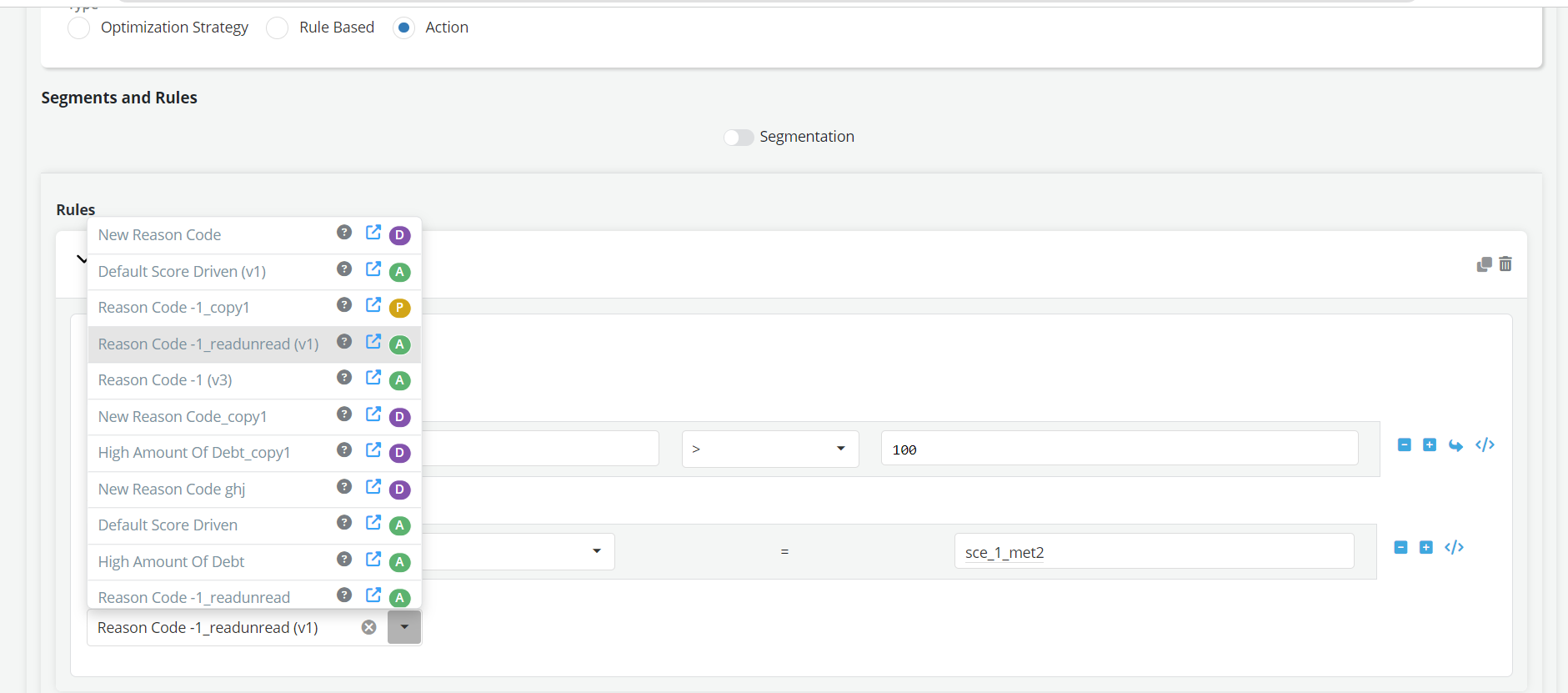
If the strategy is an Action strategy then users can assign Rule-level reason code.
-
While registering a model explainer the User can map each input to one reason code. These can then be invoked in a policy that uses the model using a "mode-driven-reason-code"