Valuation Function
Overview
A valuation function is a Framework metric that the User specifically intends to use as an objective function in an optimization strategy (e.g., NPV).
The output can be used directly to make a decision or, alternatively, they can be further summarized using a valuation function. For instance, a User can create a valuation function that use monthly interest payments to come up with a total interest payment through the lifetime of the loan.
Creating a Valuation function
- After the framework is created, click on Valuation Functions link to create the function

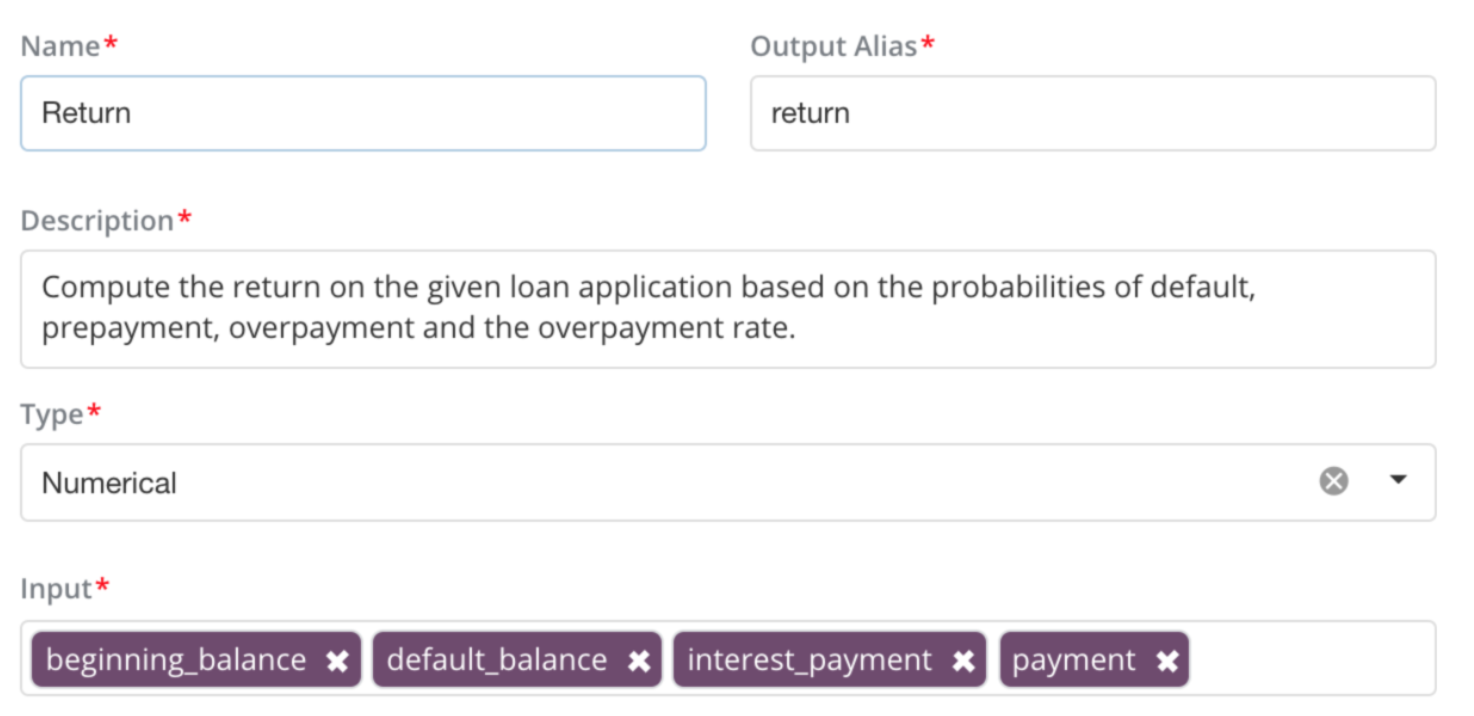
- Enter details for, Name (Free format), Alias, Description (Free format), Type
-
These are the inputs to the valuation function. They can be data elements, features, models AND framework Outputs
-
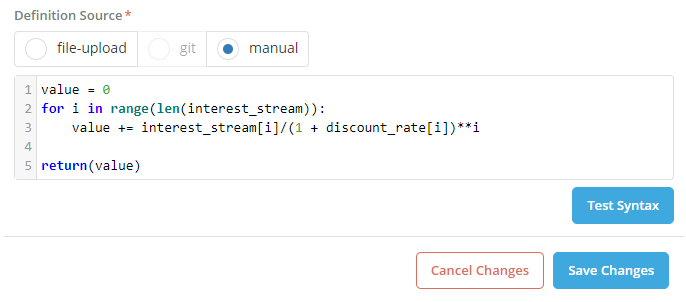
Definition: A Valuation Function can be defined either manually by typing the calculations that are performed on the inputs in the form of a python code snippet or by importing the code from a git repository. After entering the code snippet, click on the Test Syntax button to validate the code (an example of a valuation function definition can be a python code that calculates the return from a loan given the cashflows from the framework).
-
To register a Valuation Framework manually, enter the logic manually
- The logic can be upload via git or file-upload option
-
Check all information with respect to the code that was called from git as well as the code itself which can be tested by clicking on the Test Syntax button. The code that is called from git cannot be altered in any way within the platform. A user must make a new commit to git and then call the new version from it to make any changes.
-
Click on the Add Button to add the Valuation Function in this Framework. To add more Valuation Functions, repeat the above steps.